Business Waste in Central London

Introduction to Business Waste Management
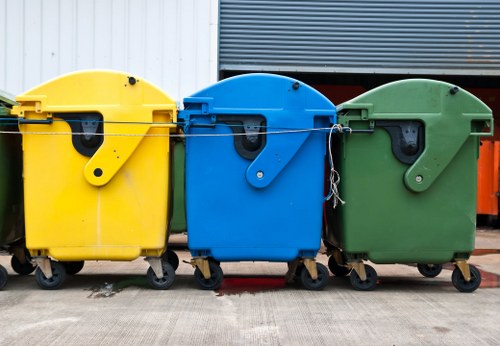
A row of three large wheeled rubbish bins positioned on a concrete surface in front of a building with metallic siding. The bins are coloured yellow, blue, and green from left to right, each with a matte finish and a black locking lid mechanism. The yellow bin appears to be slightly larger, with a smooth surface and visible lid hinge. The blue bin, centrally located, has a similar size and design, with a slightly textured surface. The green bin on the right is comparable in size and features, with a matte finish and a handle on the lid. All three bins are situated on small caster wheels for mobility, with a metal wire strung across the top of each for securing the lids. The background shows part of a building's exterior wall in light grey, with an industrial appearance, suggesting an urban or commercial environment typical of waste management services in Central London. Waste Clearance Central London manages such rubbish removal tasks efficiently, supporting local business waste disposal needs. The overall scene is well-lit with natural daylight, emphasizing the vibrant colours of the bins against the muted industrial backdrop.

Managing business waste in Central London is a critical aspect for companies aiming to maintain sustainability and comply with local regulations. With the dense population and high commercial activity, effective waste management not only supports environmental goals but also enhances operational efficiency.

Businesses in Central London face unique challenges, including limited space for waste storage, strict disposal regulations, and the need for cost-effective solutions. Addressing these challenges requires a strategic approach that integrates waste reduction, recycling, and proper disposal methods.

Environmental responsibility is no longer optional; it's a necessity. Companies are increasingly expected to minimize their environmental impact, and efficient waste management plays a pivotal role in achieving this objective.

Types of Business Waste in Central London

Three large black plastic rubbish bags, made of shiny, crinkled material, are positioned side by side on a dark background. The bags are tightly knotted at the top, with some folds and creases visible across their surfaces. They rest on a flat surface, potentially outdoors or on a driveway, with no other objects in sight. The glossy finish of the plastic reflects minimal light, emphasizing the bags' textured surfaces. The scene suggests a rubbish removal or waste clearance context, consistent with services offered by Waste Clearance Central London, particularly within an urban environment such as central London.

Understanding the various types of business waste is essential for implementing effective management strategies. The primary categories include:

  • General Waste: Non-recyclable and non-hazardous materials.
  • Recyclable Waste: Paper, cardboard, plastics, and metals that can be processed and reused.
  • Hazardous Waste: Chemicals, batteries, and electronic waste that require specialized disposal methods.
  • Organic Waste: Food scraps and other biodegradable materials.

Each type of waste demands specific handling procedures to ensure compliance with regulations and to promote sustainability.

Proper categorization and separation of waste at the source are crucial steps in effective waste management.

Regulations Governing Business Waste

A close-up image of several crumpled plastic bottles with various coloured caps, including blue, green, and red, scattered together. The bottles are made of clear, slightly textured PET plastic, with some showing reflective surfaces and partial transparency. The caps are tightly threaded onto the necks of the bottles, creating a varied yet chaotic arrangement. The scene appears well-lit, highlighting the glossy finishes of the plastic and the vibrant colours of the caps. This visual relates to waste management and rubbish disposal services, such as those provided by Waste Clearance Central London, focused on recycling and waste removal, especially in urban settings like central London. The background is predominantly blurred, emphasizing the details and textures of the bottles and caps in the foreground, with an environmental focus on plastic waste collection and disposal in a city context, relevant to the company's services in the central London area.

Central London businesses must adhere to stringent waste management regulations to avoid penalties and ensure environmental protection. Key regulations include:

  1. Environmental Protection Act: Governs waste disposal and sets standards for waste management practices.
  2. Waste Electrical and Electronic Equipment (WEEE) Regulations: Mandate the proper disposal and recycling of electronic waste.
  3. Composting and Recycling Guidelines: Encourage the reduction of waste sent to landfills through recycling and composting initiatives.
  4. Hazardous Waste Regulations: Require safe handling and disposal of hazardous materials.

Compliance with these regulations not only helps avoid fines but also promotes a positive corporate image.

Staying updated with regulatory changes is essential for maintaining compliance and implementing best practices in waste management.

Strategies for Reducing Business Waste
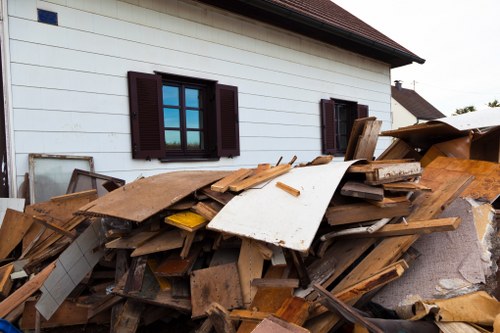
A large pile of discarded wooden boards, panels, and broken furniture resting against the side of a white residential building with dark window shutters. The debris includes weathered planks, particleboard, and some painted or treated wood, all varying in size and shape. The pile extends from the ground up to approximately knee height, partially covering a paved area or driveway. The house has a light-colored exterior with two visible windows fitted with dark, open shutters. In the background, rooftops of neighboring homes and a cloudy sky can be seen, suggesting an outdoor setting within a suburban or residential area in central London. The scene indicates a site for waste clearance, typical of residential rubbish removal services such as those provided by Waste Clearance Central London.

Implementing effective strategies can significantly reduce the volume of waste a business generates. Key strategies include:

  • Waste Audits: Regularly assessing the types and quantities of waste produced to identify reduction opportunities.
  • Recycling Programs: Establishing comprehensive recycling systems for paper, plastics, metals, and electronics.
  • Digital Transformation: Reducing paper usage by adopting digital solutions for documentation and communication.
  • Supplier Collaboration: Working with suppliers to minimize packaging and promote sustainable materials.

Adopting these strategies can lead to cost savings, enhanced sustainability, and improved operational efficiency.

Employee training and engagement are vital for the successful implementation of waste reduction initiatives.

Recycling and Waste Disposal Services
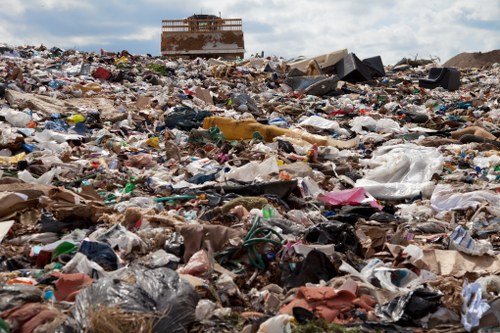
A large expanse of uneven waste material covering the ground, consisting of mixed rubbish including plastic bags, cardboard, paper, textiles, and various discarded household items, creating a chaotic and densely cluttered scene. In the background, a partially constructed or abandoned building with exposed brickwork and scaffolding stands against a cloudy sky, contrasting with the foreground's mess. The waste appears to be piled in an open outdoor area, possibly near a landfill or illegal dumping site, with no visible machinery or waste management equipment present. The overall scene highlights the scale of unmanaged waste accumulation, relevant to rubbish removal services offered by Waste Clearance Central London, which operate in the central London area and surrounding postcode districts. The textured rubbish, with crumpled and torn materials, spans the foreground, providing clear visual context for waste disposal and clearance topics in a busy urban or peri-urban environment.

Partnering with reliable recycling and waste disposal services is essential for effective business waste management in Central London. These services offer:

  • Scheduled Pick-ups: Regular waste collection tailored to the business's needs.
  • Recycling Processing: Efficient sorting and processing of recyclable materials.
  • Hazardous Waste Handling: Specialized disposal services for hazardous and electronic waste.
  • Consultation Services: Expert advice on optimizing waste management practices.

Choosing the right service provider ensures compliance with regulations and supports sustainability goals.

Evaluate service providers based on their reliability, range of services, and commitment to environmental standards.

Cost Benefits of Effective Waste Management
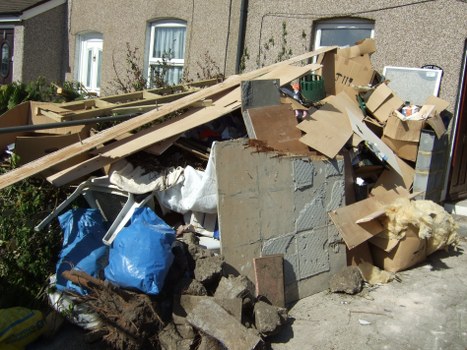
A large pile of discarded building materials, cardboard boxes, broken drywall, and other waste items stacked on a paved pavement outside a residential building in Central London. The waste includes flattened cardboard boxes, wooden planks, and plastic packaging, some resting on a blue plastic bag. The background shows the exterior of a grey, textured residential wall with two small windows, and a low hedge indicating a garden area nearby. The scene is illuminated by natural daylight, highlighting the variety of materials and their textures, such as the rough concrete and corrugated cardboard, typical of rubbish awaiting collection by Waste Clearance Central London as part of a business waste management service in the area.

Investing in effective waste management can yield significant cost benefits for businesses in Central London. Key advantages include:

  • Reduced Disposal Fees: Minimizing waste volume lowers the costs associated with waste collection and disposal.
  • Resource Recovery: Recycling and reusing materials can generate additional revenue streams.
  • Operational Efficiency: Streamlined waste processes enhance overall business efficiency.
  • Compliance Savings: Avoiding fines and penalties through adherence to waste management regulations.

Long-term savings are achievable by integrating sustainable waste management practices into business operations.

Assessing the financial impact of waste management initiatives helps in making informed investment decisions.

Technology and Innovations in Waste Management
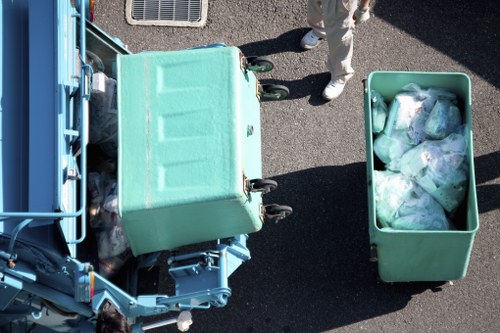
An overhead view of a waste collection scene showing a large green wheeled bin filled with rubbish, positioned on a dark asphalt surface. Adjacent to it is a smaller green bin filled with clear plastic bags containing various waste, including cardboard and plastic packaging. A portion of a blue waste collection vehicle is visible on the left side of the image, with metal components and a partially opened panel. In the background, a person dressed in light-colored trousers and shoes is standing nearby, with only their legs and feet visible. The environment suggests an outdoor area, possibly a street or parking lot, with typical urban surroundings. Waste clearance central London services are likely involved in the collection process, reflecting the practical aspect of rubbish removal in the central London area.

Advancements in technology are revolutionizing waste management for businesses in Central London. Innovative solutions include:

  • Automated Sorting Systems: Enhance the efficiency and accuracy of recycling processes.
  • Waste Tracking Software: Monitor waste generation and disposal in real-time.
  • Eco-friendly Packaging: Utilize sustainable materials to reduce waste at the source.
  • Smart Containers: Equipped with sensors to optimize waste collection schedules.

Embracing these technologies can lead to more sustainable and efficient waste management practices.

Continuous innovation is key to staying ahead in the ever-evolving landscape of waste management.

Case Studies: Successful Waste Management in Central London
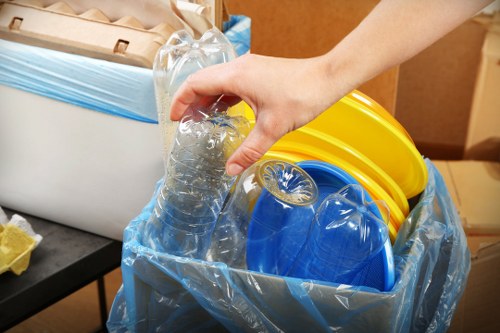
A person’s hand is seen holding a clear plastic water bottle above a blue trash bag filled with various colourful plastic waste items, including yellow and blue recycling bins and lids. The setting appears to be indoors, possibly within a home or storage area, with a wooden surface and cardboard box visible in the background. The plastic bottle is transparent, partly filled with water, and the hand gripping it is evident from the wrist to fingers. The rubbish bag is situated on a dark surface, and the surrounding environment suggests an ongoing waste collection or recycling activity, which relates to services provided by Waste Clearance Central London for waste and rubbish removal in central London. The materials displayed mainly consist of plastic, typical of household waste disposal. Lighting is neutral, providing clear visibility of textures and colors, contributing to an accurate visual representation of waste management tasks involving plastic recycling materials.

Examining successful waste management case studies provides valuable insights for businesses aiming to improve their practices. Notable examples include:

  • TechCorp Solutions: Implemented a comprehensive recycling program, reducing waste by 40% within a year.
  • GreenHub Ltd.: Adopted digital documentation, resulting in a 30% decrease in paper usage.
  • EcoGoods Retail: Partnered with sustainable suppliers, cutting down packaging waste by 25%.

These case studies highlight the tangible benefits of effective waste management strategies.

Learning from peers can inspire and guide businesses in developing their waste management plans.

Challenges in Managing Business Waste
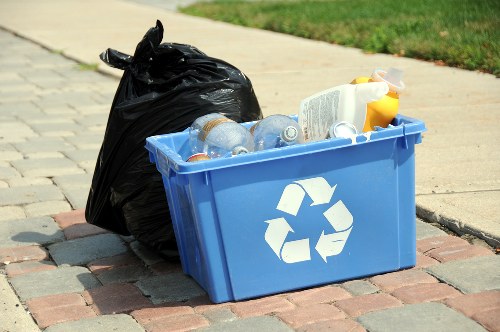
On a paved sidewalk in a residential area, a blue plastic recycling bin with the white recycling symbol on the side is filled with clear plastic bottles and a white plastic container, all partially visible and neatly arranged within the bin. Next to the bin, a black trash bag, slightly crumpled, leans against it, indicating waste collection activity. The background shows a strip of green grass and a curb, suggesting an outdoor environment typical of urban or suburban streets in central London. The scene conveys typical rubbish removal or recycling efforts, consistent with services provided by Waste Clearance Central London. Natural light illuminates the objects, highlighting the textures of the plastic bottles and the smooth finish of the bin, with the setting emphasizing an organized approach to waste disposal in a well-maintained area.

Despite the benefits, managing business waste in Central London presents several challenges:

  • Space Constraints: Limited storage areas make it difficult to handle large volumes of waste.
  • Regulatory Compliance: Navigating complex waste management laws requires expertise.
  • Cost Management: Balancing the costs of waste management services with budget constraints.
  • Employee Engagement: Ensuring all staff adhere to waste management policies.

Addressing these challenges requires proactive planning and the adoption of flexible waste management solutions.

Overcoming obstacles in waste management can lead to improved sustainability and operational success.

Future Trends in Business Waste Management

The image shows three women standing side by side against a plain white background, each holding or surrounded by various types of rubbish, highlighting different aspects of waste management. The woman on the left is holding a small blue recycling basket filled with glass bottles and jars, with visible transparent and green glass materials, and she is wearing a grey top. In the middle, a woman in a light olive-green top is leaning on a large blue plastic recycling bin that features the standard recycling symbol, filled with plastic bottles of various sizes, shapes, and colours, primarily transparent and light blue, with some appearing crumpled or partially flattened. The woman on the right, dressed in a light blue top, is standing behind a neat stack of magazines or newspapers, which are aligned and showing glossy covers and printed pages, right next to a few loose rolled-up sheets of paper. The setting suggests an environment where waste separation and recycling practices are being demonstrated, relevant to rubbish removal services in Central London.

The future of business waste management in Central London is poised for transformation, driven by emerging trends:

  • Circular Economy: Emphasizing the reuse and recycling of materials to create a closed-loop system.
  • Zero Waste Initiatives: Striving for minimal waste generation through innovative practices.
  • AI and Machine Learning: Enhancing waste sorting and processing through intelligent systems.
  • Green Building Practices: Incorporating sustainable waste management into building designs.

Staying abreast of these trends enables businesses to adopt forward-thinking waste management strategies.

Preparing for future developments ensures long-term sustainability and compliance.

Conclusion

Effective management of business waste in Central London is essential for sustainability, regulatory compliance, and operational efficiency. By understanding the types of waste, adhering to regulations, and implementing strategic waste reduction and recycling initiatives, businesses can achieve significant environmental and financial benefits.

Embracing technology and learning from successful case studies further enhance waste management practices. Despite the challenges, proactive planning and commitment to sustainability can drive positive outcomes.

Contact us today to learn more about optimizing your business waste management strategies and contributing to a greener Central London.

Get Started with Your Waste Management Plan

Ready to take the next step in transforming your business waste management? Book your service now and join the movement towards a sustainable and efficient future for your business and the Central London community.

Frequently Asked Questions

Trusted business waste services use state-of-the-art equipment and efficient methods to ensure safe and effective waste collection. From compactors to recycling machinery, our tools are regularly maintained and upgraded. Our experienced team follows industry best practices to handle all types of business waste securely. Contact our team for a quick quote and see how we can meet your waste management needs.

The best business waste companies hold accreditations from recognized industry bodies such as ISO 14001 for environmental management and AS4000 for waste handling. These certifications demonstrate our commitment to high standards and regulatory compliance. With years of proven service, you can trust us to manage your waste responsibly. Reach out today for reliable and accredited waste management solutions.

Licensed business waste companies ensure legal compliance by maintaining up-to-date certifications and insurance coverage that meet all local and national regulations. We regularly train our staff on compliance requirements and conduct audits to uphold standards. Our transparent practices guarantee that your business waste is handled legally and ethically. Contact us to learn more about our compliant waste management services.

Environmentally responsible business waste services aim for a high recycling rate, often exceeding 80%. By sorting and processing materials efficiently, we ensure maximum recyclability and minimal landfill waste. Our commitment to sustainability helps reduce your business's environmental footprint. Get in touch with us to discover how our green waste solutions can benefit your business.

Yes, affordable business waste solutions are available for small businesses near you. We offer customizable packages tailored to fit your budget and specific waste management needs. Our transparent pricing ensures no hidden fees, providing cost-effective services without compromising quality. Contact our team for a quick quote and find the best waste management option for your small business.

Trusted business waste companies prioritize safety by adhering to strict protocols and using specialized safety equipment. Our trained staff follow industry safety standards to handle all types of waste securely, minimizing risks to your business and the environment. We regularly conduct safety drills and maintenance checks to ensure continuous protection. Reach out to us for safe and reliable waste management services.

An ethical and transparent business waste company operates with honesty, clear communication, and accountability. We provide detailed reports on waste handling processes and recycling rates, ensuring you're informed every step of the way. Our commitment to ethical practices includes responsible disposal methods and fair pricing. Contact us to experience transparent and trustworthy waste management solutions.

Top-rated business waste management companies employ professionals with extensive experience in the industry, often spanning over a decade. Our team members are trained and certified to handle various types of waste efficiently and safely. This expertise ensures reliable service and effective waste solutions tailored to your business needs. Get in touch to work with our experienced waste management professionals.

Yes, many business waste companies offer flexible scheduling to accommodate your specific business requirements. Whether you need weekly pickups, on-demand services, or special handling for bulk waste, we can tailor our schedule to fit your operations. Our adaptable approach ensures minimal disruption to your business while maintaining effective waste management. Contact us to arrange a schedule that works best for you.

A business waste company committed to environmental responsibility should have certifications such as ISO 14001 for environmental management and R2 for electronics recycling, if applicable. These certifications indicate adherence to sustainable practices and rigorous environmental standards. Our company proudly holds these certifications, demonstrating our dedication to eco-friendly waste management. Reach out to learn more about our environmentally responsible services.

To ensure your business waste is recycled effectively, choose a waste management provider with a high recycling rate and transparent reporting practices. We use advanced sorting and recycling technologies to maximize material recovery and minimize landfill usage. Additionally, we provide detailed reports on how your waste is processed, giving you peace of mind. Contact us to partner with a company that prioritizes efficient recycling.

Yes, reputable business waste services are fully insured to protect your company from potential liabilities. Our comprehensive insurance coverage includes public liability and environmental protection, ensuring that any unforeseen incidents are managed effectively. This insurance provides you with confidence and security when partnering with us for your waste management needs. Get in touch to discuss our insured and reliable waste services.
Waste Clearance Central London

Explore comprehensive strategies for managing business waste in Central London, emphasizing sustainability, compliance, and cost-efficiency to enhance your company's environmental footprint.

Book Your Service Now

Get In Touch With Us.

Please fill out the form below to send us an email and we will get back to you as soon as possible.